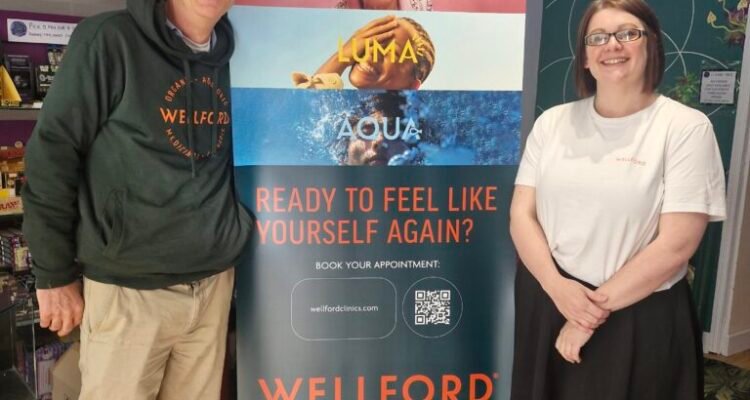
Many people come into store to ask us how to access a Medical Cannabis Prescription through their GP but the short answer is NO, Medical Cannabis Is not available via your Local GP Surgery.
You need a doctor on the GMC Specialist Register and Medical Cannabis Is accessed via a private Clinic.
In practice almost everyone goes private. In the year to January 2025 the NHS in England issued 5,413 prescriptions for licensed cannabis medicines to 880 patients. Private prescriptions run into the hundreds of thousands.
In order to access a medical Cannabis Prescription firstly you need to be diagonised with a condition that is treatable with Medical Cannabis.
Medical Cannabis is seen as a last option so you also need to have tried or been offered at least two other treatments in order to be eligible.
The short version
- Only a specialist can initiate an unlicensed prescription. That is written into regulation 16A, not a matter of policy.
- Three products hold a UK licence: Epidyolex, Sativex and Nabilone which is available via NHS. Everything else is unlicensed and available through a private clinic.
- NHS prescribing of unlicensed products is so rare the figures are withheld, because fewer than five patients were involved.
- A prescription is valid for 28 days. The “30 day supply” rule you may have heard is guidance, not law.
People come into the shop having read that cannabis is available on prescription, and want to know how to get one. The route exists, here is the honest version.
Who can prescribe
Regulation 16A of the Misuse of Drugs Regulations 2001 restricts unlicensed cannabis products to prescription by a specialist medical practitioner, defined as a doctor on the register kept under section 34D of the Medical Act 1983. That is the GMC Specialist Register.
The GMC tells its own doctors the same thing, and NHS England states that treatment must be initiated and signed by a specialist, prescribing only within their own area of practice.
GPs are not on the Specialist Register, so they cannot start you. What a GP can sometimes do is continue a prescription a specialist has already started, under a shared care agreement. That is a local arrangement rather than an automatic right, and NHS bodies will generally not accept shared care that originated with a private prescriber.
If your GP has told you they cannot prescribe cannabis, they were not fobbing you off. They are correct, and the restriction is in the regulations rather than in their hands.
The three licensed medicines
Three cannabis medicines hold a full UK marketing authorisation. Because they are licensed, they follow ordinary prescribing rules rather than the specialist-only restriction.
| Medicine | Licensed for |
|---|---|
| Epidyolex cannabidiol |
Seizures in Lennox-Gastaut syndrome and Dravet syndrome, taken alongside clobazam, and seizures in tuberous sclerosis complex. Age 2 and over. |
| Sativex nabiximols |
Moderate to severe spasticity in multiple sclerosis, in adults who have not responded well enough to other anti-spasticity medication. Must be initiated by a physician with specialist expertise in that patient group. |
| Nabilone | Nausea and vomiting caused by chemotherapy, in patients who have not responded adequately to conventional anti-sickness treatment. |
Notice how narrow those indications are. If your condition is not on that list, a licensed product is not the route, and you are into unlicensed territory.
Unlicensed products, and what a “special” means
Everything else prescribed in the UK, including the flower and oils most private patients receive, is unlicensed. These are supplied as “specials”, the same regime that covers any unlicensed medicine.
MHRA guidance is that a special may only be supplied where no licensed medicine can meet the special clinical needs of the individual patient, and that the need must be clinical. Cost, convenience and operational reasons do not count.
The practical consequence falls on the doctor. With a licensed medicine, the MHRA has already assessed quality, safety and efficacy, and there is a summary of product characteristics setting out dose and contraindications. With an unlicensed product none of that exists, so the prescriber personally carries the responsibility for the decision, the monitoring and the record keeping.
What NICE actually recommends
This is the part that disappoints people, and we would rather say it than let someone spend money on a consultation expecting a different answer.
NICE guideline NG144 is the national clinical guidance. It was published in November 2019, reviewed in May 2025, and remains current. It covers four areas and it is more restrictive than the public conversation suggests.
| Condition | What NG144 says |
|---|---|
| Chronic pain | Do not offer nabilone, dronabinol, THC or THC:CBD combinations. Do not offer CBD outside a clinical trial. |
| MS spasticity | Offer a four-week trial of THC:CBD spray where other treatment has not helped. Continue only if symptoms improve by at least 20%. |
| Chemotherapy sickness | Consider nabilone as an add-on for adults where conventional anti-sickness treatment has not worked. |
| Severe epilepsy | Licensed cannabidiol in line with its licence. For unlicensed products, NICE made research recommendations only. |
Chronic pain is the single commonest reason people ask us about medical cannabis, and it is the one condition NICE explicitly tells doctors not to treat with it. Patients who had already started on the NHS before November 2019 can continue, but that is a grandfather clause rather than an open door.
Private clinics work within a different commercial reality and prescribe more readily than NG144 contemplates. That is not automatically wrong, since NG144 is guidance to clinicians rather than a prohibition, and many private clinics prescribe medical cannabis for chronic pain.
NHS or private, in numbers
The gap between the two is the defining feature of medical cannabis in this country.
A written answer to Parliament in March 2025 gives the NHS figures for England: 5,413 prescription items for licensed cannabis medicines over a year, to 880 identified patients. Prescriptions for unlicensed products were withheld under data protection law because fewer than five patients were involved, which tells you a great deal on its own.
On the private side, the House of Commons Library records private prescription items rising from 43,933 in 2021 to 124,241 in 2022 and 182,008 by October 2023.
So if you are told medical cannabis is available in the UK, that is true. If you infer it is available on the NHS, that is not, for practical purposes, true for most conditions.
What a valid prescription looks like
Unlicensed products and Nabilone are Schedule 2 controlled drugs, so regulation 15 sets out what must appear on the prescription. It must be indelible, signed and dated by the prescriber, and carry their address, your name and address, the dose, and the form, strength and total quantity written in both words and figures.
A prescription is legally valid for 28 days from its date. Separately, the Department of Health recommends prescribers do not exceed 30 days’ supply, but that is guidance rather than a statutory limit, and can be exceeded where there is genuine clinical need.
Sativex sits in Schedule 4 Part 1 and Epidyolex in Schedule 5, so neither carries these stricter requirements.
Carrying it, and travelling with it
Regulation 6 makes possession lawful where a controlled drug in Schedules 2 to 5 was supplied to you by, or on the prescription of, a practitioner. In practice that means keeping it in the original dispensed packaging with the pharmacy label on it.
For international travel, Home Office guidance allows up to a three-month supply of a lawfully prescribed Schedule 2 to 4 Part 1 medicine without a personal licence, with a licence required above that. Carry a letter from your prescriber giving your name, the medicine, dose and quantity.
That covers leaving and entering the UK. It says nothing about whether the country you are going to will let you in with it. Many popular destinations do not recognise a UK cannabis prescription at all. Check the destination country’s own rules and the FCDO travel advice before you fly, and do not rely on a clinic’s blog post for this.
One more thing worth saying plainly: cards sold by private companies claiming to identify you as a medical cannabis user are not government or NHS documents and carry no legal status. What matters is an actual prescription and the dispensing label that came with it.
Sources
- Misuse of Drugs Regulations 2001, regulation 6 (lawful possession) — legislation.gov.uk
- Misuse of Drugs Regulations 2001, regulation 15 (prescription requirements) — legislation.gov.uk
- Misuse of Drugs Regulations 2001, regulation 16A (specialist prescribing) — legislation.gov.uk
- General Medical Council, Information for doctors on cannabis-based products for medicinal use — gmc-uk.org
- NHS England, Cannabis-based products for medicinal use — england.nhs.uk
- NICE guideline NG144, recommendations — nice.org.uk
- Epidyolex summary of product characteristics — medicines.org.uk
- Sativex summary of product characteristics — medicines.org.uk
- Nabilone summary of product characteristics — medicines.org.uk
- Written question 40028, answered 20 March 2025 (NHS prescribing figures) — questions-statements.parliament.uk
- House of Commons Library, Medical use of cannabis, CBP-8355, 29 January 2025 — commonslibrary.parliament.uk
- Home Office, Travelling with medicine containing controlled drugs — gov.uk
This article explains the regulatory position and links to the sources throughout. It is general information, not legal or medical advice. Whether medical cannabis is appropriate for you is a question for a qualified clinician. Last reviewed 2 September 2026.